TL;DR: Dating apps make meeting someone feel high-pressure and low-trust, so I designed Traces: an app that matches people on their values and gets them meeting in person, with no swiping and no profiles. After talking to 14 people on campus, I ran a matchmaking experiment to test my algorithm and got 3 real matches.
What you give
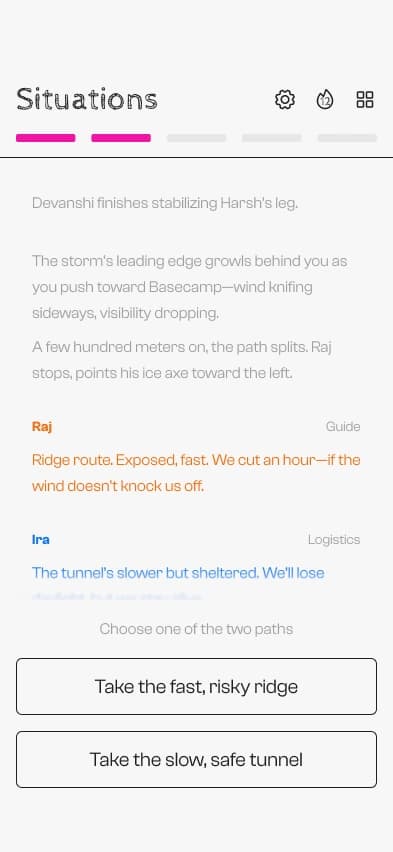
A Situation
Each choice indicates a pattern of personality trait/s
What you get
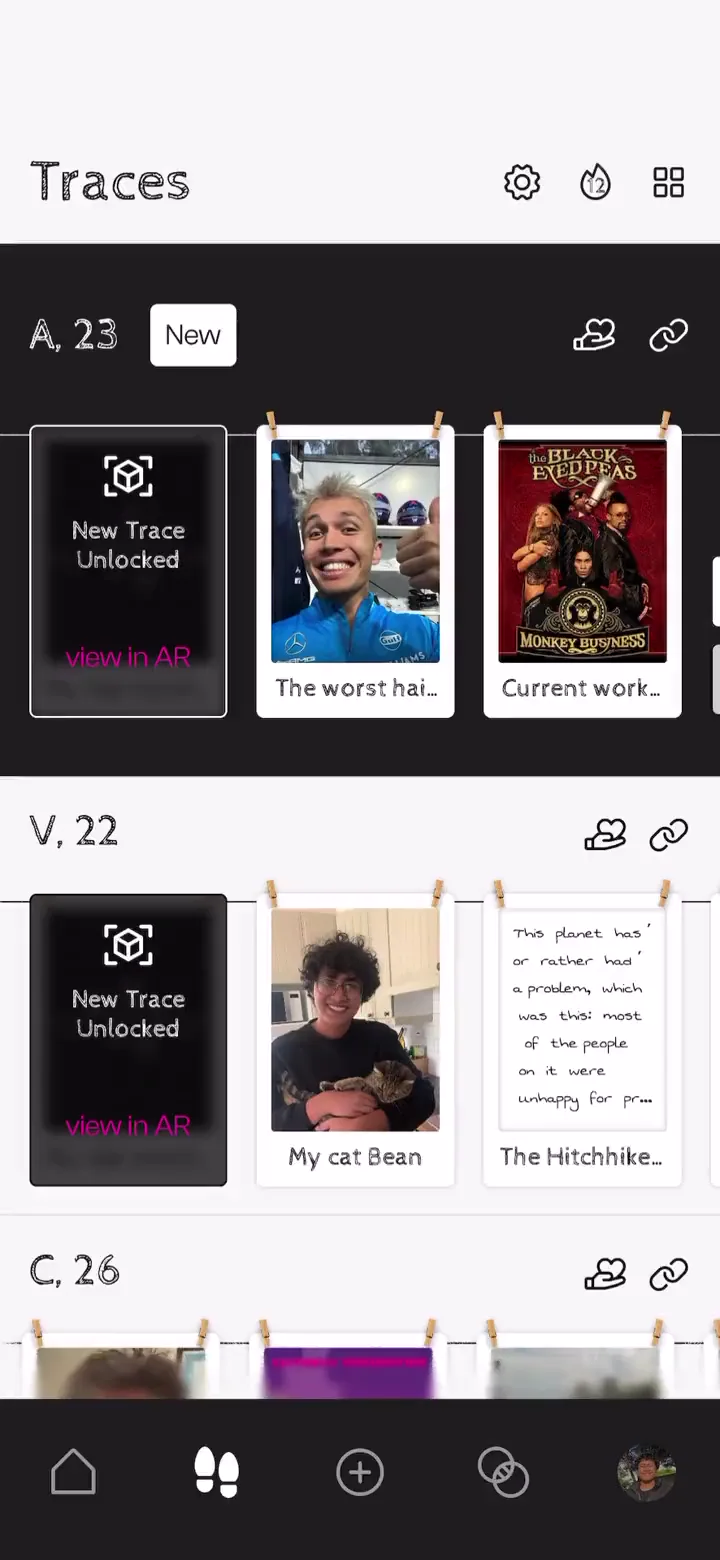
A Trace
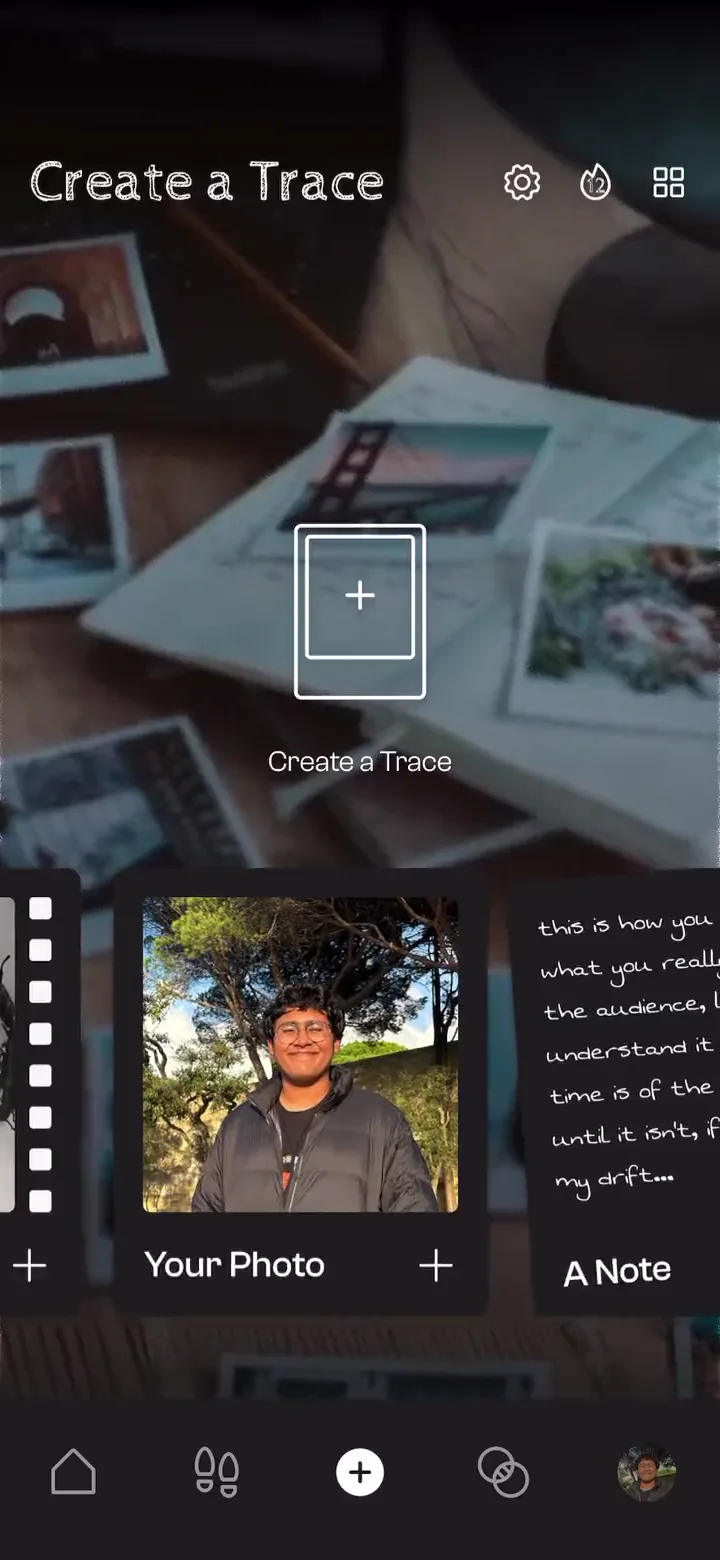
A Trace can be any form of media: a photo, video, song or a note
Want the interviews?
Read moreBeing judged swipe after swipe wears people out.
78% of users report burnout
Source: Forbes
50% find dating apps embarrassing
Source: My research
An app paid by the month gains nothing when you leave.
62% of dating-app revenue is subscriptions
Source: Grand View Research
75% say dating apps aren’t for “real” relationships
Source: My research
The Sword of Damocles
Fear of exposure pushes people to stay masked, safe, curated.
The Masquerade
Curated profiles fuel the cycle of odds, swipes, and addiction.
The Casino
The more rigged the system, the more frequent rejection, invisibility, or humiliation.
A short story you play on a timer. The choices you make show what you value.
Photos, notes and songs, left one at a time instead of a profile.
You give
AnswerSituations
UploadTraces
The system matches you on values
How it matchesTracesof people you’ll vibe with
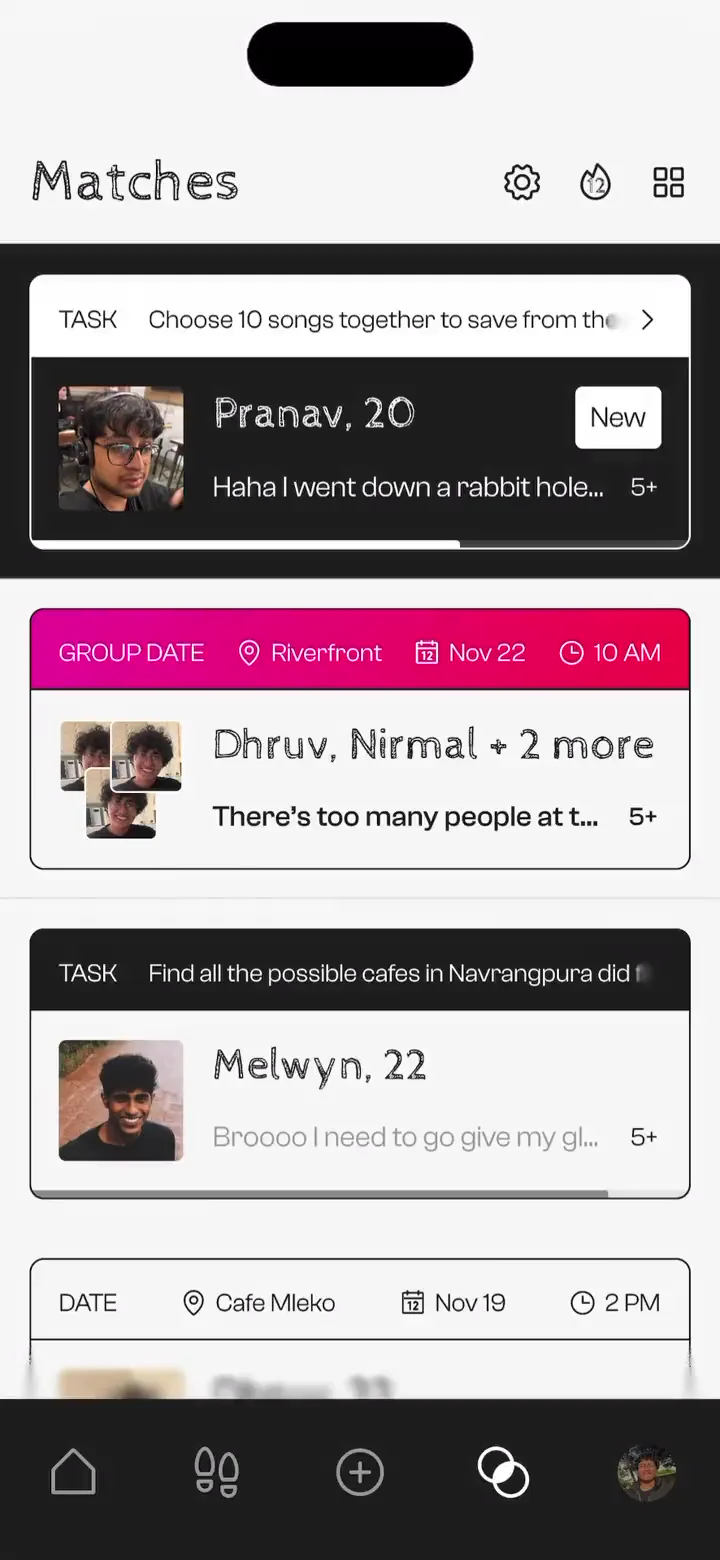
A dateif it’s mutual
You get
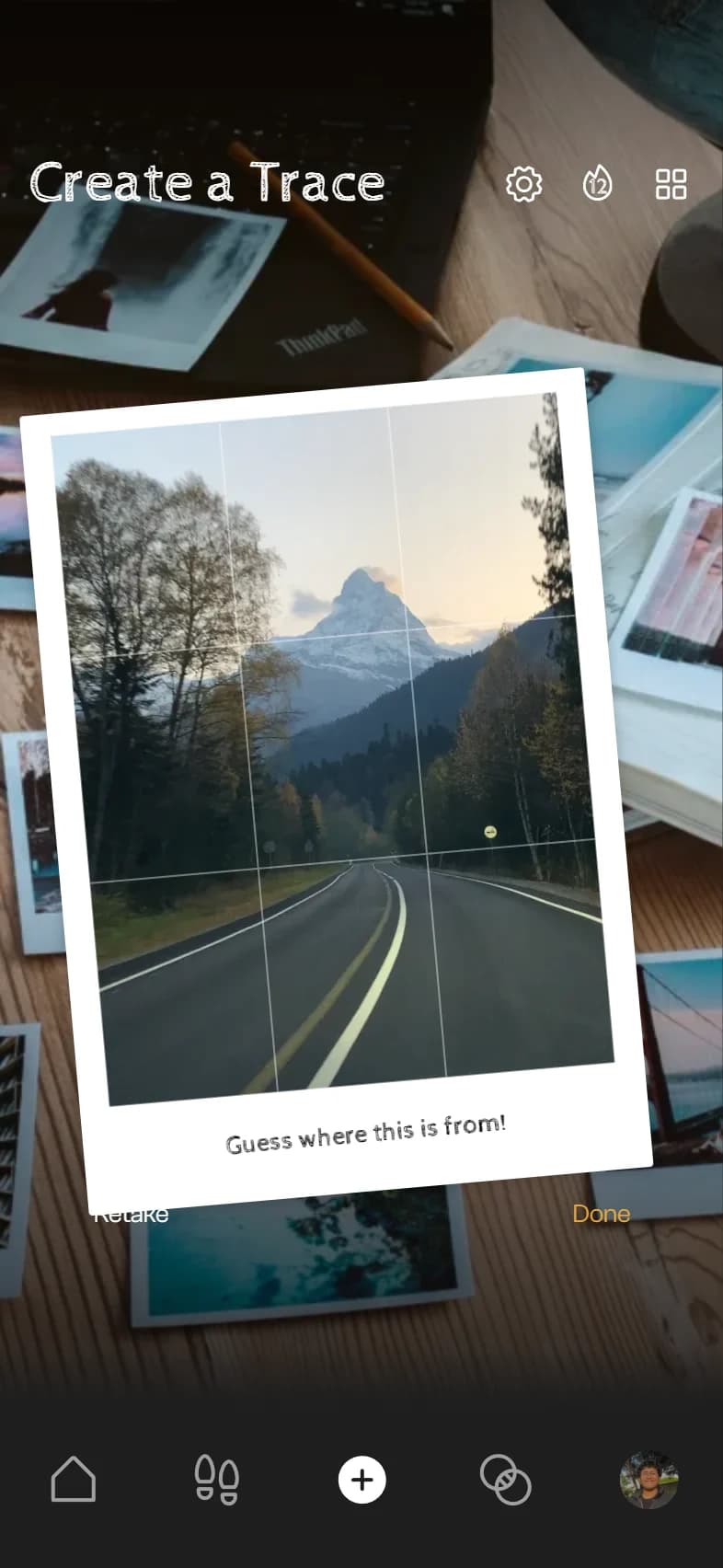
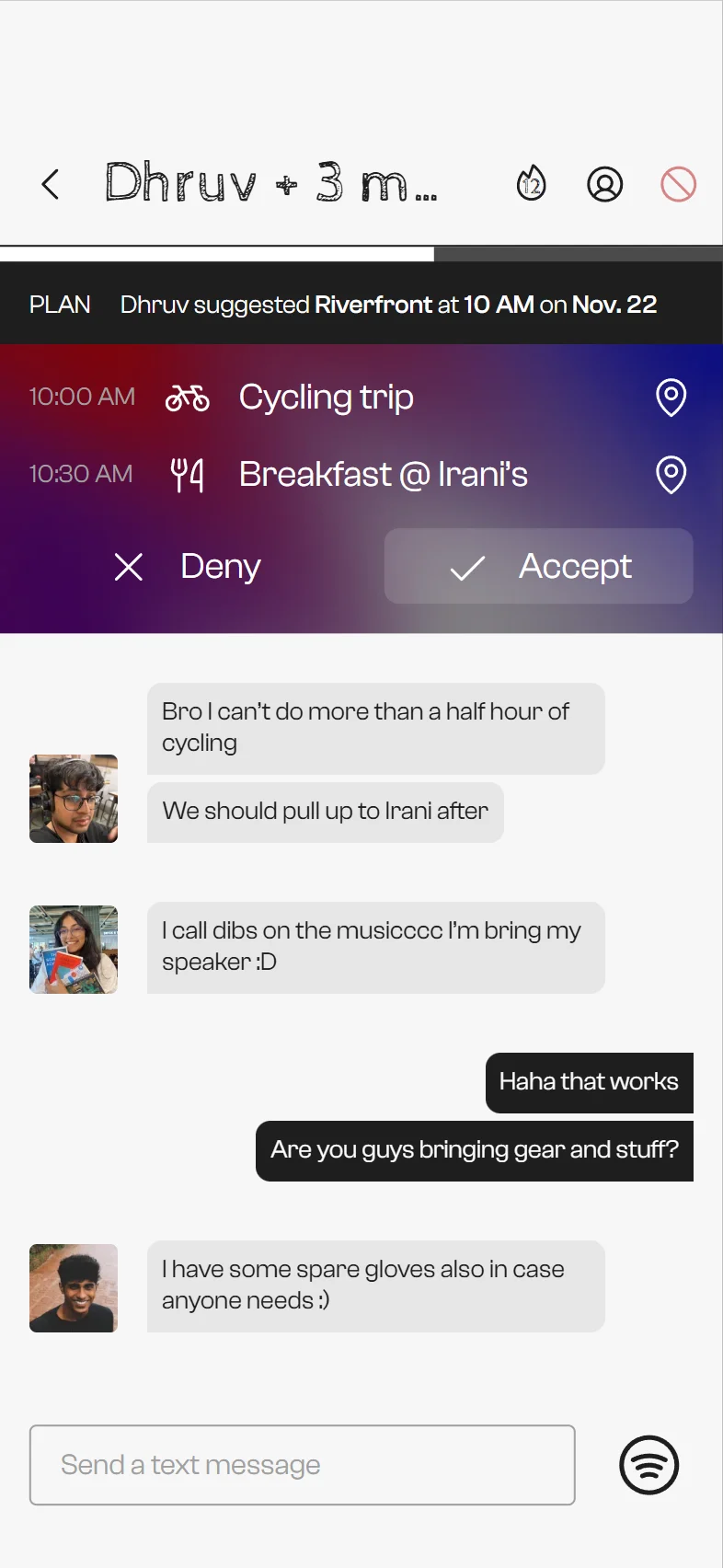
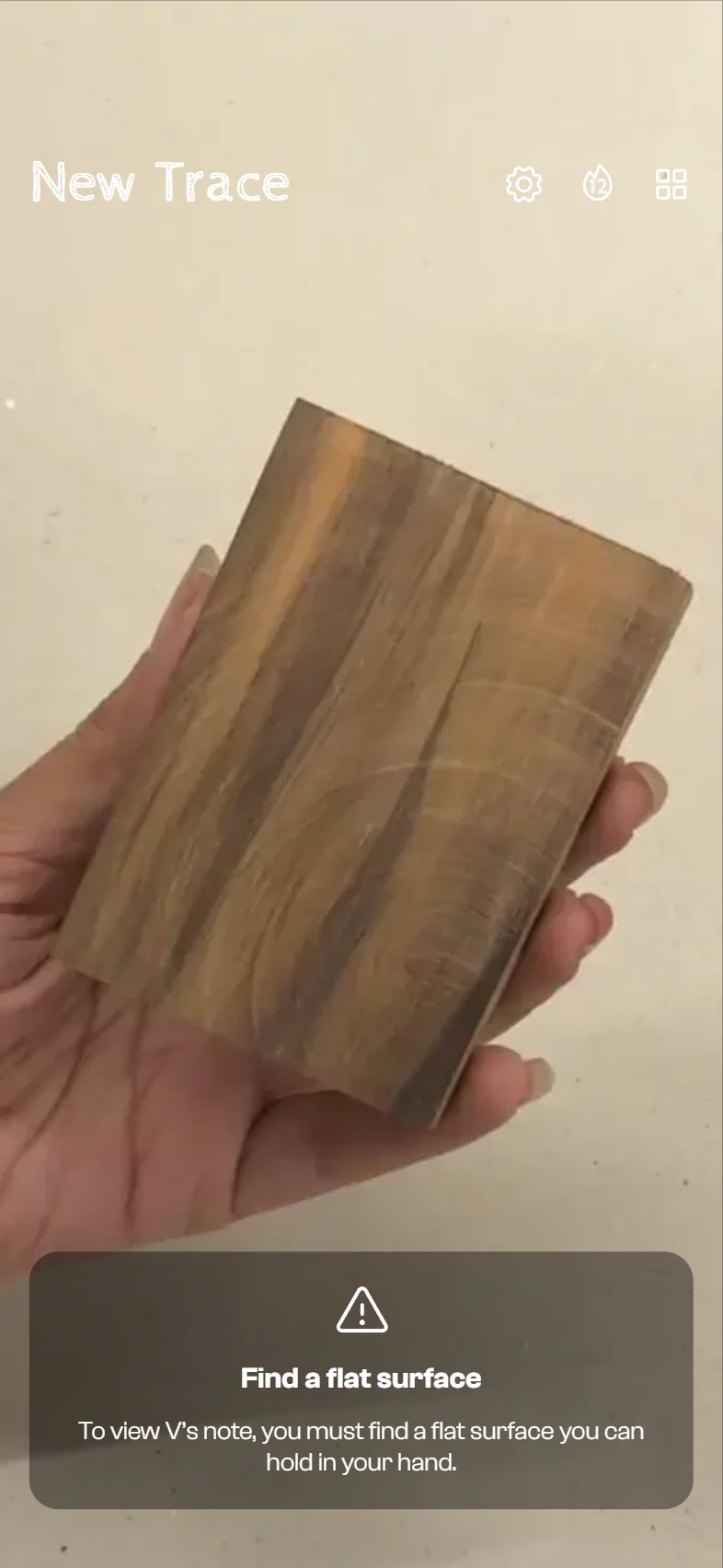
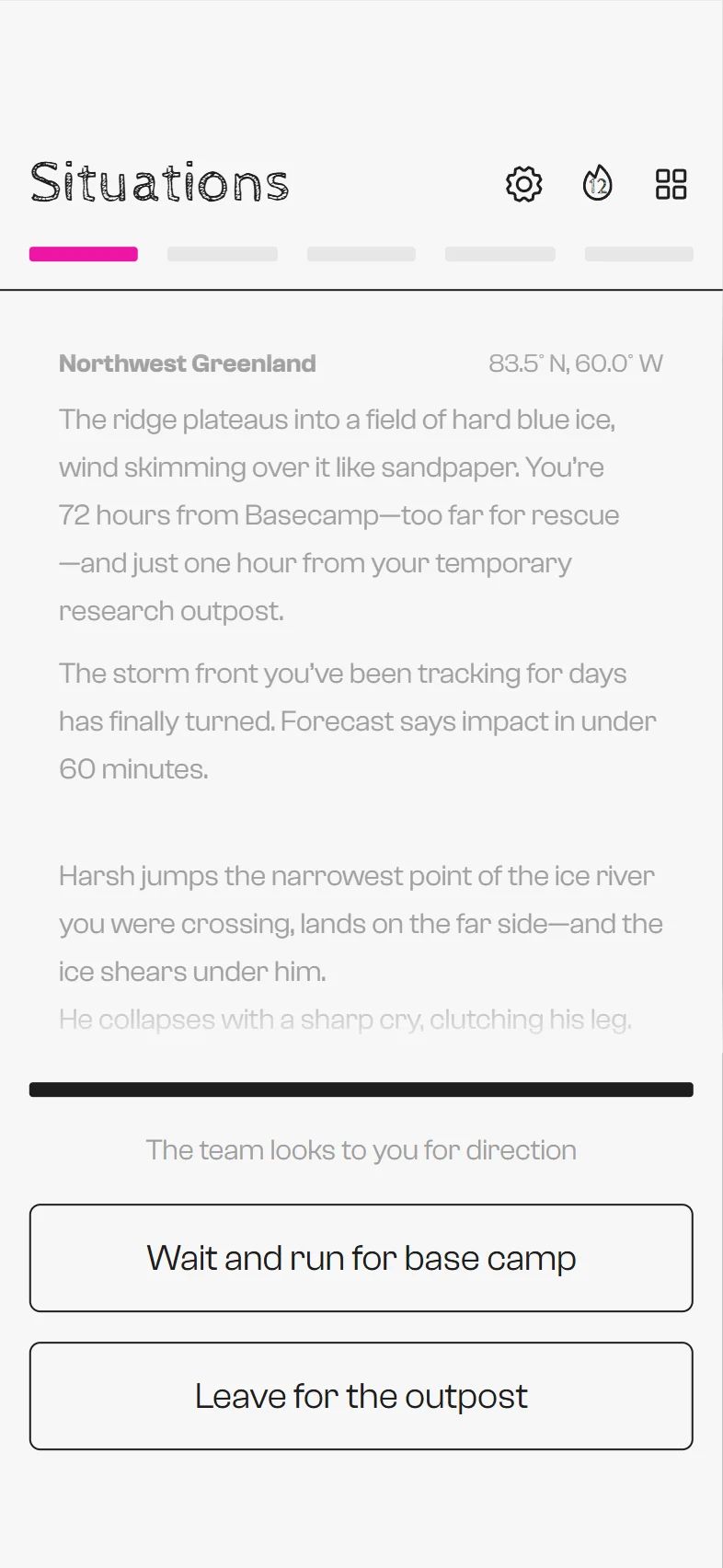
Create a Trace
By not forcing users to create a profile at once, and instead uploading traces over time, quality increases and stress of creation decreases.
Pressure Profiles are low effort and rushed.
By not forcing users to create a profile at once, and instead uploading traces over time, quality increases and stress of creation decreases.
Trust Profiles don’t feel like real people.
By viewing Traces in AR, and seeing Traces of someone over time, the information presented feels meaningful and real.
Trust Dating app algorithms don’t really work.
By making difficult moral and value-based choices, the system can actually tell what kind of person you are, which allows for real value-based matching.
Pressure Cold starts are high-stress and awkward.
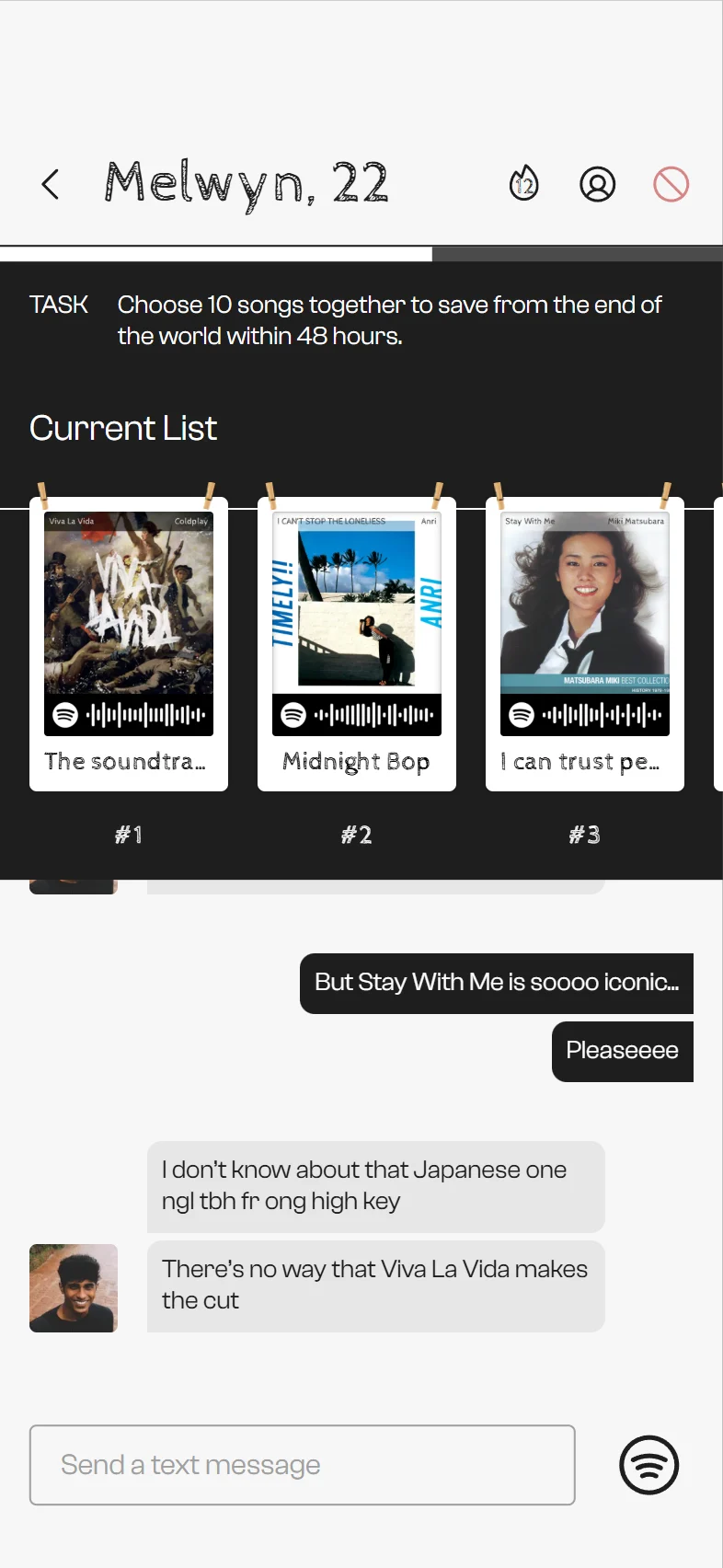
Instead of throwing users into a chat with no context, co-op activities offer a common goal to work towards and build chemistry before meeting.
Pressure Matches don’t go anywhere.
To add more direction to the match, date planning makes it safer and easier to take the conversation from chat to real life.
Pressure Solo dates can put too much pressure on a first meeting.
Based on mutual interests and location, group dates make it less intimidating, especially for women, to meet people in real life.
Problem
I wanted to know people's values, but I can’t take their word for it
Question
How could I find out without asking?
Solution
By putting them in hypothetical situations
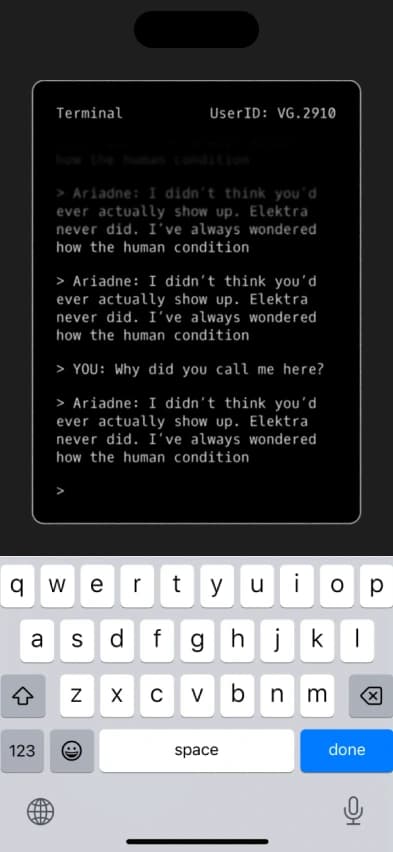
Free-text chat with a character. It asked too much effort of people to answer.
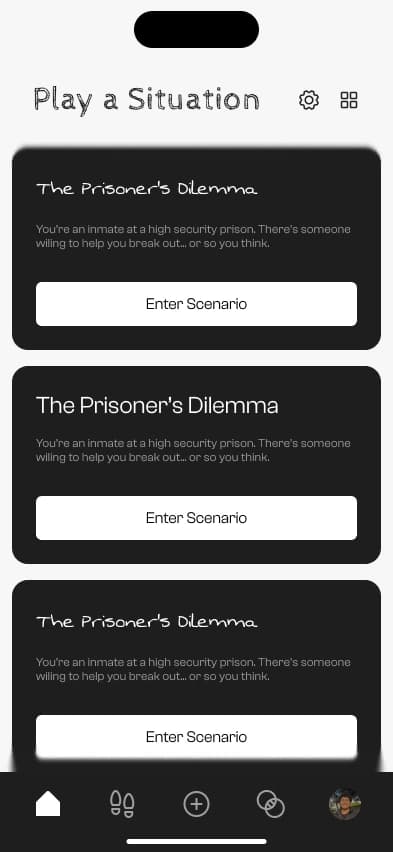
A catalogue of dilemmas to choose from. It moved the focus from dating to entertainment, and since everyone picked different ones, it gave different data points for different people.
A timed runthrough of decisions which reveal character traits.
Situations exist to build trust: the matchmaking experiment showed values, not interests, predict a match.
3 real matches out of 14
I matched 14 students on campus by hand, from about 400 datapoints. What predicted a match was openness to a partner, not shared interests.
No one-time profile felt more natural
People said not having to build a profile in one go was much more natural, and much less stressful.
Status Studio project · eight weeks at Future Factory, tested, not built
The first step was talking to people — sixteen structured interviews, twelve women and four men, then a live experiment to test whether the matching logic actually held up.
open conversations on tech and dating
interviews · 12 women, 4 men · ages 20–25
matchmaking-experiment respondents
discrete datapoints collected
real matches produced
Five methods, each a different angle on the same question:
Interviews
Card sorting
Fly on the wall
Try it yourself
Matchmaking experiment
The interview questions, in three parts:
How the matchmaking experiment ran:
Twelve questions each: flexes, flaws, fears, intent, the ideal first date, dealbreakers.
Each person’s answers distilled, with an LLM prompt, into an anonymous 80–100-word card in their own voice.
The cards matched by hand, on values and openness rather than shared interests.
About 3 real matches, from 14 people and around 400 datapoints.
What the matching weighed, eight dimensions:
Dating Intent
Attachment Style
Social Energy
Emotional Regulation
Dominance
Intellectual Depth
Conflict Resolution
Vulnerability Comfort
Seven themes recurred across the interviews:
Legitimacy & Stigma
Communication Early On
Authenticity of Self
Platforms for Initiation
Expectations of Relationships
Safety & Control
Social Validation Through Friends
Sensemaking on the interviews kept landing on the same thing under every complaint: a basic desire for companionship nothing else was meeting. That behaviour sorted into nine archetypes, a POEM framework split by gender, and an iceberg model that pushed past behaviour to cause.
The Validation Seeker
The Mastikhor
The Point Nemo
The Horndog
The Mole
The Goody Two Shoes
The Escapist
The Bad Actors
The Apostate
Two of them can enter a zero-sum game: the Validation Seeker getting compliments with no intent to meet is, by the same action, the Goody Two Shoes being denied the thing they came for.
The POEM framework, split by gender:
People
For women, the POEM brought out a very fundamental issue with dating apps: they’re not fun. Something as universal and anticipated as a romantic relationship should be enjoyable, but the apps make the whole process stressful at several points along the way.
The iceberg model, from what shows to what drives it:
The iceberg is what pushed the project past behaviour to cause — the loop under Sensemaking, above, is built directly on its bottom layer.